-

Putting Trials on Trial
Elaine Craig
Over the past few years, public attention focused on the Jian Ghomeshi trial, the failings of Judge Greg Lenehan in the Halifax taxi driver case, and the judicial disciplinary proceedings against former Justice Robin Camp have placed the sexual assault trial process under significant scrutiny. Less than one percent of the sexual assaults that occur each year in Canada result in legal sanction for those who commit these offences. Survivors often distrust and fear the criminal justice process, and as a result, over ninety percent of sexual assaults go unreported. Unfortunately, their fears are well founded. In this thorough evaluation of the legal culture and courtroom practices prevalent in sexual assault prosecutions, Elaine Craig provides an even-handed account of the ways in which the legal profession unnecessarily - and sometimes unlawfully - contributes to the trauma and re-victimization experienced by those who testify as sexual assault complainants. Gathering conclusive evidence from interviews with experienced lawyers across Canada, reported case law, lawyer memoirs, recent trial transcripts, and defence lawyers’ public statements and commercial advertisements, Putting Trials on Trial demonstrates that - despite prominent contestations - complainants are regularly subjected to abusive, humiliating, and discriminatory treatment when they turn to the law to respond to sexual violations. In pursuit of trial practices that are less harmful to sexual assault complainants as well as survivors of sexual violence more broadly, Putting Trials on Trial makes serious, substantiated, and necessary claims about the ethical and cultural failures of the Canadian legal profession.
-

Putting Trials on Trial: Sexual Assault and the Failure of the Legal Profession
Elaine Craig
Over the past few years, public attention focused on the Jian Ghomeshi trial, the failings of Judge Greg Lenehan in the Halifax taxi driver case, and the judicial disciplinary proceedings against former Justice Robin Camp have placed the sexual assault trial process under significant scrutiny. Less than one percent of the sexual assaults that occur each year in Canada result in legal sanction for those who commit these offences. Survivors often distrust and fear the criminal justice process, and as a result, over ninety percent of sexual assaults go unreported. Unfortunately, their fears are well founded. In this thorough evaluation of the legal culture and courtroom practices prevalent in sexual assault prosecutions, Elaine Craig provides an even-handed account of the ways in which the legal profession unnecessarily - and sometimes unlawfully - contributes to the trauma and re-victimization experienced by those who testify as sexual assault complainants. Gathering conclusive evidence from interviews with experienced lawyers across Canada, reported case law, lawyer memoirs, recent trial transcripts, and defence lawyers’ public statements and commercial advertisements, Putting Trials on Trial demonstrates that - despite prominent contestations - complainants are regularly subjected to abusive, humiliating, and discriminatory treatment when they turn to the law to respond to sexual violations. In pursuit of trial practices that are less harmful to sexual assault complainants as well as survivors of sexual violence more broadly, Putting Trials on Trial makes serious, substantiated, and necessary claims about the ethical and cultural failures of the Canadian legal profession.
-
Global Environmental Change and Innovation in International Law
Neil Craik, Cameron Jefferies, Sara Seck, and Timothy Stephens
The challenges to global order posed by rapid environmental change are increasingly recognized as defining features of our time. In this groundbreaking work, the concept of innovation is deployed to explore normative and institutional responses in international law to such environmental change by addressing two fundamental themes: first, whether law can foresee, prevent, and adapt to environmental transformations; and second, whether international legal responses to social, economic, and technological innovation can appropriately reflect the evolving needs of contemporary societies at national and international scales. Using a range of case studies, the contributions to this collection track innovation - descriptively, normatively, and as a process in and of itself - to explain international environmental law's functionality in the Anthropocene. This book should be read by anyone interested in the critical intersection of environmental and international law.
-
Learning Canadian Criminal Law
Don Stuart and Steve Coughlan
Learning Canadian Criminal Law, 14th Edition continues to focus on tools students must acquire to be effective criminal lawyers, including critical skills. The aim is to explore substantive principles and the trial context: the adversary system, how elements of crime are proved, principles of act and fault, legal justifications and excuses and sentencing principles. Integrated throughout is a consideration of the impact of the Charter. The focus is on major sources: the Criminal Code itself and key judicial decisions. Learning is facilitated by notes, questions, problems and general review questions. Learning Canadian Criminal Law, 14th Edition has been thoroughly updated and re-edited. Legislative changes considered include the new offence to criminalise the purchase of sex, anti-terrorism provisions enacted in Bill C-51 and limiting the partial provocation defence to murder. Also addressed are current Federal bills to remove Criminal Code provisions declared to violate the Charter, repeal anachronistic provisions, complex legal burden and reverse onus provisions, to amend sexual assault laws and to return to discretion not to award victim surcharges.
-
Abortion Law in Transnational Perspective: Cases and Controversies
Rebecca J. Cook, Joanna Erdman, and Bernard M. Dickens
It is increasingly implausible to speak of a purely domestic abortion law, as the legal debates around the world draw on precedents and influences of different national and regional contexts. While the United States and Western Europe may have been the vanguard of abortion law reform in the latter half of the twentieth century, Central and South America are proving to be laboratories of thought and innovation in the twenty-first century, as are particular countries in Africa and Asia. Abortion Law in Transnational Perspective offers a fresh look at significant transnational legal developments in recent years, examining key judicial decisions, constitutional texts, and regulatory reforms of abortion law in order to envision ways ahead.
The chapters investigate issues of access, rights, and justice, as well as social constructions of women, sexuality, and pregnancy, through different legal procedures and regimes. They address the promises and risks of using legal procedure to achieve reproductive justice from different national, regional, and international vantage points; how public and courtroom debates are framed within medical, religious, and human rights arguments; the meaning of different narratives that recur in abortion litigation and language; and how respect for women and prenatal life is expressed in various legal regimes. By exploring how legal actors advocate, regulate, and adjudicate the issue of abortion, this timely volume seeks to build on existing developments to bring about change of a larger order.
-
Detention and Arrest
Steve Coughlan and Glen Luther
The criminal justice system aims to maintain a balance between the individual interest of private citizens to carry on their lives free from state interference, and the communal interest in maintaining a safe society. These two goals come into conflict with each other most visibly when agents of the state physically take control of private citizens — that is, when they exercise their powers to detain or to arrest. The book focuses on “street-level” encounters: detentions and arrests that occur in the course of investigating crime and laying charges. The authors explore the initial interaction between agents of the state or others authorized to detain and arrest, and the private citizens whose liberty is interfered with. It is at that point that the balance between societal safety and individual liberty is most keenly in play. This second edition has been updated to incorporate significant changes which have taken place with regard to statutory powers (the new citizen’s arrest power and others), to common law powers (powers of detention, safety searches, search incident to arrest, etc.) and to Charter rights (freedom from arbitrary detention, right to counsel, and so on).
-
Lawyers' Ethics and Professional Regulation, 3rd Edition
Richard Devlin, Alice Woolley, Brent Cotter, and John M. Law
This text is a comprehensive discussion of the professional responsibilities of lawyers in Canada.
-
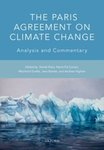
The Paris Agreement on Climate Change: Analysis and Commentary
Meinhard Doelle, Daniel Klein, Maria Pia Carazo, Jane Bulmer, and Andrew Higham
The most important climate agreement in history, the Paris Agreement on Climate Change represents the commitment of the nations of the world to address and curb climate change.Signed in December 2015, it entered into force on 4th November 2016. Countries are moving into implementation, and efforts at all levels will be needed to fulfill its ambitious goals. The Paris Climate Agreement: Commentary and Analysis combines a comprehensive legal appraisal and critique of the new Agreement with a practical and structured commentary to all its Articles. Part I discusses the general context for the Paris Agreement, detailing the scientific, political, and social drivers behind it, providing an overview of the pre-existing regime, and tracking the history of the negotiations. It examines the evolution of key concepts such as common but differentiated responsibilities, and analyses the legal form of the Agreement and the nature of its provisions. Part II comprises individual chapters on each Article of the Agreement, with detailed commentary of the provisions which highlights central aspects from the negotiating history and the legal nature of the obligations. It describes the institutional arrangements and considerations for national implementation, providing practical advice and prospects for future development. Part III reflects on the Paris Agreement as a whole: its strengths and weaknesses, its potential for further development, and its relationship with other areas of public international law and governance. The book is an invaluable resource for academics and practitioners, policy makers, and actors in the private sector and civil society, as they negotiate the implementation of the Agreement in domestic law and policy.
-

The Paris Agreement on Climate Change: Analysis and Commentary
Meinhard Doelle, Daniel Klein, Maria Pia Carazo, Jane Bulmer, and Andrew Higham
The most important climate agreement in history, the Paris Agreement on Climate Change represents the commitment of the nations of the world to address and curb climate change. Signed in December 2015, it entered into force on 4th November 2016. Countries are moving into implementation, and efforts at all levels will be needed to fulfill its ambitious goals. The Paris Climate Agreement: Commentary and Analysis combines a comprehensive legal appraisal and critique of the new Agreement with a practical and structured commentary to all its Articles. Part I discusses the general context for the Paris Agreement, detailing the scientific, political, and social drivers behind it, providing an overview of the pre-existing regime, and tracking the history of the negotiations. It examines the evolution of key concepts such as common but differentiated responsibilities, and analyses the legal form of the Agreement and the nature of its provisions. Part II comprises individual chapters on each Article of the Agreement, with detailed commentary of the provisions which highlights central aspects from the negotiating history and the legal nature of the obligations. It describes the institutional arrangements and considerations for national implementation, providing practical advice and prospects for future development. Part III reflects on the Paris Agreement as a whole: its strengths and weaknesses, its potential for further development, and its relationship with other areas of public international law and governance. The book is an invaluable resource for academics and practitioners, policy makers, and actors in the private sector and civil society, as they negotiate the implementation of the Agreement in domestic law and policy.
-
Canadian Health Law and Policy
Joanna Erdman
Much more than the study of laws relevant to the area of medicine, Canadian Health Law and Policy draws together the legal and policy issues that are relevant to human health, and sheds new light on emerging and continuing trends. Written by Canada's leading health law scholars, the fifth edition of this unique work provides expert commentary and analysis on a wide range of emerging health law related issues. It is a vital resource for anyone seeking to understand the developing and critical issues in health law and policy.
-
Canadian Health Law and Policy
Joanna Erdman, Vanessa Gruben, and Erin Nelson
Much more than the study of laws relevant to the area of medicine, Canadian Health Law and Policy draws together the legal and policy issues that are relevant to human health, and sheds new light on emerging and continuing trends. Written by Canada's leading health law scholars, the fifth edition of this unique work provides expert commentary and analysis on a wide range of emerging health law related issues. It is a vital resource for anyone seeking to understand the developing and critical issues in health law and policy.
-

Canada and the Rule of Law: 150 Years After Confederation
Janine L'Espérance and Richard Devlin
In Canada, 2017 is a significant year: it marks the 150th anniversary of Canadian Confederation, and the 35th anniversary of the enactment of the Canadian Charter of Rights and Freedoms. It offers the occasion to reflect on Canadian society, culture, and institutions. This ICJ Canada publication asks: what does the rule of law in Canada mean today? It contains short essays by jurists from across Canada, who have unique perspectives on the rule of law.
-
Aquaculture Law and Policy: Global, Regional and National Perspectives
Nigel Bankes, Irene Dahl, and David VanderZwaag
With aquaculture operations fast expanding around the world, the adequacy of aquaculture-related laws and policies has become a hot topic. This much-needed book provides a three-part guide to the complex regulatory landscape. The expert contributors first review the international legal dimensions, including chapters on law of the sea, trade, and access and benefit sharing. Part Two offers regional perspectives, discussing the EU and regional fisheries management organizations. The final part contains eleven case studies exploring how leading aquaculture producing countries have been putting sustainability principles into practice.
-

Philosophy of Law in the Arctic
Dawid Bunikowski, Jaakko Husa, Diana Ginn, Ko Hasegawa, Karol Dobrzeniecki, Patrick Dillon, Francis Joy, Rene Kuppe, Leena Heinämäki, Maura Hanrahan, Tom Svensson, Makoto Usami, Agnieszka Szpak, Rebecca Johnson, and Brendan Tobin
This is rather the first book with a title "Philosophy of Law in the Arctic" in the literature. This philosophy of law is a very wide and cross-disciplinary area of research: between law, philosophy, anthropology, history, cultural ecology or environmental studies. I have no doubts that we have done such kind of philosophy in the academia so far, not using this term, but keeping up with the concept, the idea.
The book is a result of research conducted by many members of the Sub-group of Philosophy of Law in the Arctic (the University of the Arctic). This team seems a very interdisciplinary academic group. Our cooperation bears fruit.
The aim of the book is to define and systematise Arctic legal philosophy problems. In this book, there are five thematic parts. Each part consists of two-five short articles (we can call them also chapters or papers). These are the sixteen short articles all together. Each article consists of between six and fourteen pages. So going further, what we see in the book then is, in fact, a set of both theoretical and practical papers. The topics of these papers (chapters) are different as the authors are different while representing a wide-ranging scope of academic disciplines or specialisations. Each paper is followed by a relevant bibliography, which might be helpful for other scholars interested in the field. The seventeen writers come from such countries as Finland (4), Norway (1), Canada (3), Poland (3), Japan (2), Austria (1), Ireland (1), and England (2). Some of them have Arctic indigenous roots (3). In the end of the book, there is a very original attachment - the map of Arctic Canada.
-
Canadian Maritime Law
Aldo Chircop
Canadian Maritime Law is the leading scholarly text and reference work on maritime law in Canada. It covers the full scope of admiralty, shipping, and navigation issues in the Canadian and international contexts. Since the first edition, maritime law as legislated, judicially developed, and practised in Canada has evolved substantially. Four editors led a team of twenty-eight scholars, practitioners, and other field specialists from across Canada to produce a comprehensive text accompanied by extensive lists of legislation, international treaties, and cases, along with a detailed index. For students and practitioners new to the field, the text uses plain language and defines all technical legal and shipping terms. For experienced legal and other practitioners, it affords the means to analyze maritime issues according to Canadian law, with due notice of its divergence from US and UK law and practice. This text provides insights into the Canadian perspectives, content, experience, and practice in this field and will appeal to legal practitioners, government officials, academics, students, and all others engaged with the regulation of all types of navigation and shipping. Practitioners and scholars in other countries interested in international and comparative maritime law will also benefit from this fully updated work.
-
Canadian Maritime Law
Aldo Chircop
Canadian Maritime Law is the leading scholarly text and reference work on maritime law in Canada. It covers the full scope of admiralty, shipping, and navigation issues in the Canadian and international contexts. Since the first edition, maritime law as legislated, judicially developed, and practised in Canada has evolved substantially. Four editors led a team of twenty-eight scholars, practitioners, and other field specialists from across Canada to produce a comprehensive text accompanied by extensive lists of legislation, international treaties, and cases, along with a detailed index. For students and practitioners new to the field, the text uses plain language and defines all technical legal and shipping terms. For experienced legal and other practitioners, it affords the means to analyze maritime issues according to Canadian law, with due notice of its divergence from US and UK law and practice. This text provides insights into the Canadian perspectives, content, experience, and practice in this field and will appeal to legal practitioners, government officials, academics, students, and all others engaged with the regulation of all types of navigation and shipping. Practitioners and scholars in other countries interested in international and comparative maritime law will also benefit from this fully updated work.
-
Criminal Procedure
Steve Coughlan
This book sets out and examines the law governing criminal procedure in Canada. It explains the body of rules and principles that govern the investigation, prosecution, and adjudication of any offence enacted by Parliament for which an accused person would have a criminal record if found guilty by a court exercising jurisdiction under the Criminal Code. These include such things as the rules by which police powers are exercised, the right to counsel, search warrants, interim release, and procuring attendance of witnesses. This third edition updates the law in all areas of criminal procedure. The chapter on powers of search and seizure has been completely rewritten to take into account significant new decisions, including, among others, Spencer, on internet anonymity; Vu, on searches of computers; TELUS Communications, on text messaging and wiretap authorizations; MacDonald, on safety searches; and Fearon, on search of cell phones incident to arrest. It also covers the various statutory changes made to search powers by the Protecting Canadians from Online Crime Act.
-
Regulating Judges: Beyond Independence and Accountability
Richard Devlin and Adam Dodek
Regulating Judges presents a novel approach to judicial studies. It goes beyond the traditional clash of judicial independence versus judicial accountability. Drawing on regulatory theory, Richard Devlin and Adam Dodek argue that judicial regulation is multi-faceted and requires us to consider the complex interplay of values, institutional norms, procedures, resources and outcomes. Inspired by this conceptual framework, the book invites scholars from 19 jurisdictions to describe and critique the regulatory regimes for a variety of countries from around the world. This innovative and provocative analysis of the many different ways that judiciaries around the world are regulated covers common law, civil law and other legal systems, and the developed and developing world. Contributors include a diverse talent pool of established scholars and new voices for a globally inclusive comparative examination of judiciaries in Europe, Asia, Africa, the Americas and Oceania. The overall conclusion is that the regulation of judges is very much a work in progress, and that a variety of actors bear responsibility for moving the project forward. Scholars in the fields of law, social sciences, regulation theory, and public administration will find Regulating Judges an impactful read, as will regulators, public policy makers and analysts, and judges themselves.
-
Regulating Judges: Beyond Independence and Accountability
Richard Devlin and Adam M. Dodek
Regulating Judges presents a novel approach to judicial studies. It goes beyond the traditional clash of judicial independence versus judicial accountability. Drawing on regulatory theory, Richard Devlin and Adam Dodek argue that judicial regulation is multi-faceted and requires us to consider the complex interplay of values, institutional norms, procedures, resources and outcomes. Inspired by this conceptual framework, the book invites scholars from 19 jurisdictions to describe and critique the regulatory regimes for a variety of countries from around the world.
-
Canadian Maritime Law
Edgar Richard Gold, Aldo Chircop, Hugh Kindred, and A William Moreira
Canadian Maritime Law is the leading scholarly text and reference work on maritime law in Canada. It covers the full scope of admiralty, shipping, and navigation issues in the Canadian and international contexts. Since the first edition, maritime law as legislated, judicially developed, and practised in Canada has evolved substantially. Four editors led a team of twenty-eight scholars, practitioners, and other field specialists from across Canada to produce a comprehensive text accompanied by extensive lists of legislation, international treaties, and cases, along with a detailed index.
For students and practitioners new to the field, the text uses plain language and defines all technical legal and shipping terms. For experienced legal and other practitioners, it affords the means to analyze maritime issues according to Canadian law, with due notice of its divergence from US and UK law and practice.
This text provides insights into the Canadian perspectives, content, experience, and practice in this field and will appeal to legal practitioners, government officials, academics, students, and all others engaged with the regulation of all types of navigation and shipping. Practitioners and scholars in other countries interested in international and comparative maritime law will also benefit from this fully updated work.
-

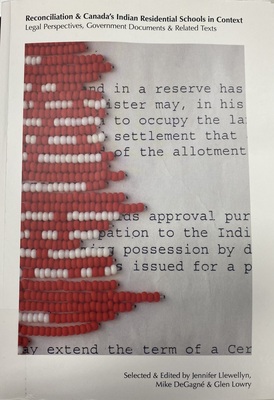
Reconciliation & Canada’s Indian Residential Schools in Context: Legal Perspectives, Government Documents & Related Texts
Jennifer Llewellyn, M. DeGagné, and G. Lowry
Reconciliation & Canada's Indian Residential Schools in Context includes a selection of government documents, legal cases, and critical commentary related to the subject of the Indian Residential School System (IRSS). This comprehensive volume, while far from exhaustive, provides students and scholars of Canadian political and legal histories, Indigenous governance, Aboriginal healing, truth and reconciliation with a broad basis for understanding the impact of the IRSS on Survivors and their communities and the larger socio-political context for reconciliation among Aboriginal and non-Aboriginal peoples in Canada.
-
Comparative Tax Law
Victor Thuronyi, Kim Brooks, and Borbala Kolozs
Comparative Tax Law, now presented in an updated new edition, focuses on the essential patterns of tax law in different jurisdictions across the globe. Although the details of tax law are literally endless—differing not only from jurisdiction to jurisdiction but also from day-to-day changes in the working of the system—structures and patterns exist across tax systems that can be understood with relative ease. Considering the dynamic nature of tax law, whose rate of change exceeds that of any other field of law, the author’s clear identification of the fundamental structures and also the underlying patterns that all tax systems have in common—as well as where the differences lie—guides the reader and offers resources for further research.
What’s in this book:
The authors elucidate the commonalities and differences across countries in areas including (much of the detail is new to the second edition):
- general anti-avoidance rules;
- court decisions striking down tax laws as violating constitutional rules against retroactivity, unequal treatment of equals, confiscation, and undue vagueness;
- statutory interpretation;
- inflation adjustment rules and the allowance for corporate equity
- value added tax systems;
- concepts such as “tax”, “capital gain”, “tax avoidance”, and “partnership”;
- corporate-shareholder tax systems;
- the relationship between tax and financial accounting;
- taxation of investment income;
- tax authorities’ ability to obtain and process information about taxpayers; and
- systems of appeals from tax assessments.
The information and analysis pulls together valuable material which is scattered over disparate literature, much of it not available in English.
How this will help you:
This book provides an immensely useful introduction to the core common knowledge that any well-informed tax lawyer must have about comparative tax law in our times. In addition to its value to tax law specialists dealing with details in other tax specialties, and to tax lawyers seeking a practical understanding of modes of thought and prevailing opinions in countries other than their own, the book provides particularly welcome additional knowledge to practitioners confronting cross-border taxation issues.
-
Routledge Handbook of National and Regional Ocean Policies
Biliana Cicin-Sain, David VanderZwaag, and Miriam C. Balgos
This comprehensive handbook, prepared by leading ocean policy academics and practitioners from around the world, presents in-depth analyses of the experiences of fifteen developed and developing nations and four key regions of the world that have taken concrete steps toward cross-cutting and integrated national and regional ocean policy.
All chapters follow a common framework for policy analysis. While most coastal nations of the world already have a variety of sectoral policies in place to manage different uses of the ocean (such as shipping, fishing, oil and gas development), in the last two decades, the coastal nations covered in the book have undertaken concerted efforts to articulate and implement an integrated, ecosystem-based vision for the governance of ocean areas under their jurisdiction. This includes goals and procedures to harmonize existing uses and laws, to foster sustainable development of ocean areas, to protect biodiversity and vulnerable resources and ecosystems, and to coordinate the actions of the many government agencies that are typically involved in oceans affairs.
The book highlights the serious conflicts of use in most national ocean zones and the varying attempts by nations to follow the prescriptions emanating from the 1982 UN Law of the Sea Convention and the outcomes of the 1992, 2002, and 2012 sustainable development summits. The interrelationship among uses and processes in the coast and ocean requires that ocean governance be integrated, precautionary, and anticipatory. Overall, the book provides a definitive state-of-the-art review and analysis of national and regional ocean policies around the world.
Printing is not supported at the primary Gallery Thumbnail page. Please first navigate to a specific Image before printing.