-
Managing the Unknown: Why Fact-Finding Procedures Matter to Civil Justice
Nayha Acharya
Managing the Unknown inquires into the legitimacy of judicial fact-finding in civil litigation. In deciding a case, judges must determine, authoritatively, “what happened?” based on whatever fragmented evidence is available. Given the inevitability of factual uncertainty, there is no guarantee of accuracy, only an assurance that the finding is “more likely than not” correct. On what basis, then, do we accept the authority of judicial fact-finding?
Probing key jurisprudential ideas, law professor Nayha Acharya outlines the crucial role of procedural integrity by showing that the legitimacy of legal outcomes, including factual findings, is rooted in the propriety of their underlying processes. To maintain legitimate authority, legal procedures must demonstrably respect human dignity which includes ensuring that we are treated as equal, autonomous agents. Accordingly, the legitimacy of fact-finding depends on a process that respects the autonomy and equality of legal subjects, which means it is a factually reliable and fully participatory model. By positing the centrality of process in the legitimacy of judicial fact-finding, and given that fact-finding is a central element of law practice, this book invites all legal players from students to practitioners to reflect deeply on their role in maintaining procedural integrity and rule of law.
-
Climate Change Litigation Cases in Context
Camille Cameron, Patricia Galvão Ferreira, and Riley Weyman
This book provides a timely and detailed analysis of key climate change cases in domestic courts across the globe, examining the procedural, evidentiary, legal, and strategic dimensions of the complex climate governance landscape. It reveals how, as the threats of climate change grow and as policy fails to respond, individuals and groups have increasingly been turning to national courts to seek relief and clarity through litigation.
Chapters:
- The climate governance tightrope: novel strategies and the role of courts in climate change
- Mathur v Ontario: youth-led constitutional challenge to government climate policy lights the path to future recognition of climate rights in Canada
- Lliuya v RWE: introducing polluter pays via transnational climate litigation?
- Common law at the coal face: Smith v Fonterra and others
- Centre for Oil Pollution Watch (COPW) v Nigeria National Petroleum Corporation (NNPC): locus standi and the emerging trends in climate litigation in Nigeria
- Human rights as procedural due process in climate mitigation policies: Verein KlimaSeniorinnen Schweiz v. Switzerland
- A constitutional duty to deploy climate finance: PSB et al v
Brazil (Climate Fund) - Held v Montana: climate science takes the stand
- Misdzi Yikh v Canada: indigenizing rights-based climate litigation
- Promoting climate litigation via industrial law and policy? Chinese climate litigation in context
- When corporate and financial law goes green: Australian Securities and Investments Commission v Mercer Superannuation (Australia) Limited
- Threatened birds meet creative judges: India’s climate
litigation takes flight in MK Ranjitsinh and Others v Union of
India and Others
-
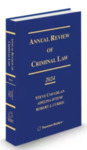
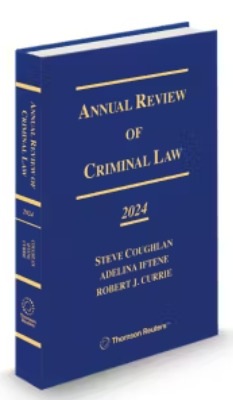
Annual Review of Criminal Law 2024
Steve Coughlan, Adelina Iftene, and Robert Currie
The Annual Review of Criminal Law 2024 presents the most significant criminal law decisions in five areas:
- Substantive Criminal law (Chapter 1)
- Policing and the Charter (Chapter 2)
- Evidence (Chapter 3)
- Criminal procedure (Chapter 4)
- Sentencing (Chapter 5)
Steve Coughlan wrote chapters 2 and 4, Adelina Iftene wrote chapters 1 and 5, and Rob Currie wrote chapter 3. All three are faculty members at the Schulich School of Law, Dalhousie University.
-
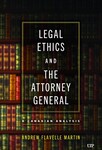
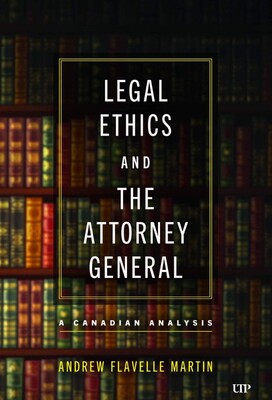
Legal Ethics and the Attorney General: A Canadian Analysis
Andrew Flavelle Martin
In Canada, the Attorney General holds a complex and unique role within the federal, provincial, and territorial governments. Despite this key position, there is relatively little knowledge and understanding of the role and professional responsibilities of the Attorney General among the public, the media, policymakers, and politicians – including at least some Attorney Generals themselves. Legal Ethics and the Attorney General adopts a doctrinal approach to examine and explain how legal ethics, and particularly the law of lawyering, applies to the Attorney General.
The book illustrates that, while the role of the Attorney General is unique, the individual occupying this position practises law and should be held to the same standards as any other lawyer. It addresses common misconceptions: that the Attorney General is not truly a lawyer, that actions deemed wrongful for other lawyers may not be considered wrongful for the Attorney General, or that the accountability measures appropriate for lawyers do not apply to the Attorney General.
Ultimately, Legal Ethics and the Attorney General reveals the importance of the accountability of the Attorney General, especially to the provincial and territorial law societies that serve as regulators of the legal profession. This accountability is essential not only for upholding the rule of law but also for enabling these societies to fulfil their statutory mandates to regulate the legal profession in the public interest.
-
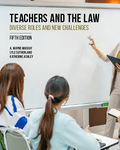
Teachers and the Law: Diverse Roles and New Challenges, 5th Edition
A. Wayne MacKay, Lyle Sutherland, and Katherine Ashley
An invaluable resource for teachers and other education professionals, Teachers and the Law provides the legal knowledge necessary to fulfill multiple roles and to succeed in the modern Canadian classroom. Teachers will be equipped to address a wide range of issues, including technology and social media, harassment, bullying, censorship, Indigenous education, privacy, equality, and more.
This edition reflects updated legislation relating to the ever-evolving rights of teachers, students, and parents, as well as emphasizing the impact that courts and human rights tribunals have in shaping educational policies and practices. It also features updated coverage of both societal and national challenges facing today’s teachers, including the use of technology in classrooms, increases in school violence, the lingering effects of the COVID-19 pandemic, and more.
Chapter 1: Introduction to the Legal Framework
Chapter 2: Teachers as Parents
Chapter 3: Teachers as Educational State Agents
Chapter 4: Teachers as Guardians of Equality
Chapter 5: Teachers as Agents of the Police
Chapter 6: Teachers as Social Welfare Agents
Chapter 7: Teachers as Employees
Chapter 8: The Role of Technology in the Classroom and Beyond
Chapter 9: The Modern Teacher: Adapting to Evolving Realities
Appendix 9A: A Framework for Ethical Decision Making
-
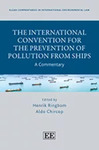
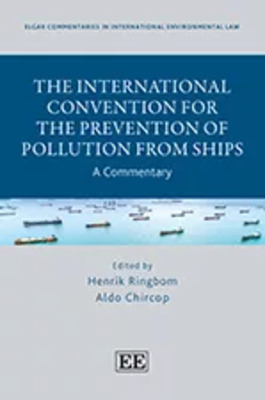
The International Convention for the Prevention of Pollution from Ships
Henrik Ringbom and Aldo Chircop
This Commentary presents an in-depth exploration of what is widely regarded as the most important International Maritime Organization (IMO) convention on vessel source pollution. Leading international experts provide an authoritative analysis of the International Convention for the Prevention of Pollution from Ships 1973/78 and its subsidiary instruments, collectively known as MARPOL. Key Features:
- Examines the MARPOL system in detail including its annexes and regulations
- Investigates the history, purposes, rationale and regulatory approach of MARPOL
- Identifies legal and regulatory issues as well as the challenges of implementation and enforcement
- Emphasizes the vital role that MARPOL has played in the protection of the marine environment from all forms of shipping
The International Convention for the Prevention of Pollution from Ships is invaluable to practitioners and professionals in ministries and departments of transport, national maritime administrations, intergovernmental organizations, shipping industries and international NGOs. It is also an essential resource for students and academics in international environmental law, law of the sea and international maritime law.
-
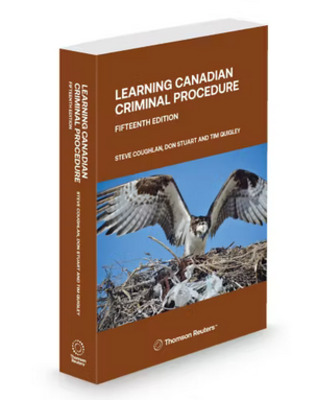
Learning Canadian Criminal Procedure
Don Stuart and Steve Coughlan
This fifteenth edition has been updated and reorganized. We have removed out-of-date material and have added new cases, including these recent major rulings from the Supreme Court:
- Bykovets – reasonable expectation of privacy in IP addresses
- Stairs – search incident to arrest in the home
- Tessier – cautions re voluntariness of a confession
- Lafrance – additional consultations with counsel
- Beaver – “fresh starts” after a Charter violation
- McColman – seriousness of the offence in exclusion of evidence decisions
- Kruk – ungrounded common sense assumptions and myths and stereotypes
- Tayo Tompouba – grounds for appeal
A major feature of this edition has been to reorganize the materials, especially those dealing with searches, detentions, arrests, and interrogation, to more closely resemble the structure of a Charter analysis of the relevant rights. Chapter 2, dealing with search and seizure, begins by analysing reasonable expectation of privacy, which establishes whether there was a search at all, and then moves on to consider whether the search was reasonable, looking at the various sources of authorization. In doing this it follows the approach to a s. 8 Charter analysis. Chapter 3 follows a similar structure, looking first at whether there was a detention at all and then whether it was arbitrary, as s. 9 of the Charter requires. Other chapters have been revised to remove older material which no longer provides helpful guidance about the law or to students. Similarly, in many instances cases have been edited further, to give greater focus on the key issues.
-
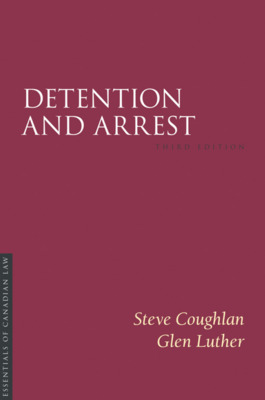
Detention and Arrest
Steve Coughlan and Glen Luther
The criminal justice system aims to maintain a balance between the individual interest of private citizens to carry on their lives free from state interference, and the communal interest in maintaining a safe society. These two goals come into conflict with each other most visibly when agents of the state take control of private citizens — that is, when they exercise their powers to detain or to arrest.
The book focuses on “street-level” encounters: detentions and arrests that occur in the course of investigating crime and laying charges. The authors explore the initial interaction between agents of the state or others authorized to detain and arrest, and the private citizens whose liberty is interfered with. It is at that point that the balance between societal safety and individual liberty is most keenly in play.
This third edition has been updated to incorporate significant statutory changes to Part XVI of the Criminal Code (Compelling Appearance of Accused Before a Justice and Interim Release), to common law powers (powers of detention, safety searches, search incident to arrest, etc.), to developments in the law in dealing with racial profiling, and to Charter rights (freedom from arbitrary detention, right to counsel, and so on).
-

Mainstreaming Porn: Sexual Integrity and the Law Online
Elaine Craig
The ubiquity of streaming sites such as Pornhub has transformed the social role of sexually explicit content today. Online porn is no longer a shady corner of the internet; it is mainstream. Its production, commodification, and consumption on data-driven online platforms has changed - and is changing - our personal relationships, social and legal systems, and sexual norms.
Online porn platforms are shaping sexual desires and practices in the same way that Google and Facebook have affected social relationships and the circulation of information: porn is now consumed on data-driven platforms with algorithms designed to engage the attention of users, encourage the production of user-generated videos, and filter content. Through frank examination of mainstream content with themes of incest, intoxication, and so-called consensual rough sex, issues that play out in life and in court, Elaine Craig shows how the platformization of mainstream pornography is shaping our sexual culture in real time. Mainstreaming Porn maps a complicated web of legal culture and legal actors, from corporate lawyers and platform content regulation to the criminal, civil, and administrative contexts in which porn companies operate and the legal interpretation of sexual assault defences. All have profound implications for the promotion and protection of everyone’s sexual integrity, and especially that of women and girls.
Mainstreaming Porn is an unflinching, carefully balanced perspective on a divisive topic. Without demonizing pornography or its consumption, Craig makes a powerful argument for applying legal mechanisms to corporate-owned online platforms while offering a sober evaluation of the limits of the law in governing pervasive cultural norms and social understandings of sexuality.Table of Contents
Acknowledgments ix
- Introducing Porn on the Platform 3
- Porn Has Changed 28
- Porn Platforms as Social Meaning Makers 51
- Are We Living in the House That Porn Built? 76
- The Problems with Incest-Themed Porn 106
- Do Judges Watch Porn? Porn, Sadomasochism, and the So-Called Rough Sex Defence 149
- What to Do about Unlawful Porn on the Platform? 191
- What to Do about Lawful Porn on the Platform? 224
Notes 263
Index 377
-
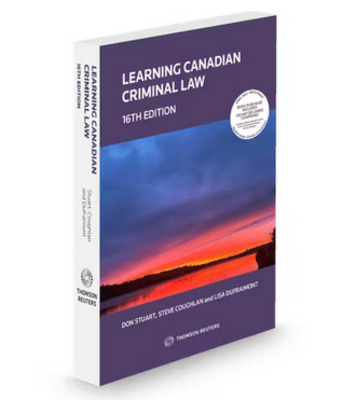
Learning Canadian Criminal Law
Don Stuart, Steve Coughlan, and Lisa Dufraimont
Learning Canadian Criminal Law, 16th Edition is a comprehensive text that provides vital background information and a coherent structure for understanding the law. Focusing on the substantive aspects of the criminal justice system and the trial context, this casebook covers the adversary system, how the elements of crime are proven, defences and sentencing practices.
The 16th edition continues to focus on tools students must acquire to be effective criminal lawyers, including critical skills. The aim is to explore substantive principles and the trial context: the purposes of punishment, the adversary system, how elements of crime are proved, principles of act and fault, legal justifications and excuses, and sentencing options. Integrated throughout is a consideration of the impact of the Charter. The focus is on major sources: the Criminal Code itself and key judicial decisions. Comprehension and critical review is facilitated by notes, questions, problems, and general review questions.
The 16th edition incorporates significant decisions affecting vital aspects of criminal law, and we have incorporated material reflecting those. Among the most notable developments are R. v. Brown in 2022, striking down the version of s. 33.1 of the Code that had been enacted following the 1994 decision in Daviault. Another notable decision is R. v. Khill from 2021, the first Supreme Court decision giving substantial guidance about how to interpret the defence of the person provisions in s. 34 as, enacted in 2013. Also included is the discussion in the 2022 decision in R. v. Kirkpatrick about condom stealthing and its impact on consent, raising the difficult question of whether the reasoning in that case is consistent with the Supreme Court’s prior reasoning on the issue in R. v. Hutchinson.
-
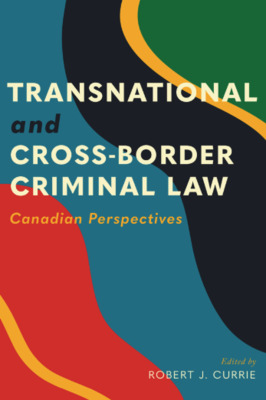
Transnational and Cross-Border Criminal Law: Canadian Perspectives
Robert J. Currie
The time of globalization has seen an onslaught of criminal activity that crosses borders. The legal suppression and prosecution of transnational and cross-border crime raise unique and complex legal issues, and law enforcement, lawyers, and judges have struggled to keep up. Transnational & Cross-Border Criminal Law: Canadian Perspectives fills a pronounced gap in Canadian legal literature.
Written by subject matter experts, each chapter exposes and analyzes a current and pressing issue in this realm and is designed both to serve as a resource for researchers and to provide cutting-edge insight on front-burner issues. The group of authors — made up of prosecutors, defence lawyers, government counsel, academics, and civil society advocates — take on a variety of subjects, including terrorism, financial crime and corruption, jurisdiction, extradition, money laundering, trafficking, maritime enforcement, cross-border evidence-gathering, and the international transfer of prisoners. This unique collection will help to advance general understanding of one of the most pressing public policy issues of our time.
-
Nova Scotia Real Property Practice Manual
C. W. MacIntosh and Diana Ginn
The only comprehensive guide available to the practice and procedure of real property law in Nova Scotia. Each chapter contains expert commentary on topics such as marketable title, title problems and how to solve them, and subdivision and building control.
-
Land & Property in Canada's Political Economy
Jamie Baxter
- This digital casebook is fully open-access and open source, available online to freely access, use, copy remix and redistribute.
- Consistent with the open online format, the casebook is designed to be adaptive and under continuous development.
- After teaching from the casebook for the first time in 2021-22, I hired a full-time research assistant this summer (supported by the Class of 1967 Teaching Excellence Award) to continue developing both the content and supporting technology for the casebook. That work has led to substantial revisions to the initial version, including a dedicated framework for “teaching property from an anti-colonial perspective”.
- On the technological side, a significant part of this research project has been the development of a platform for building and publishing the casebook (and other legal casebooks) that allows for collaborative authorship and content sharing.
- Our advances on this portion of the project are described in the article "Exit, Voice and Disloyalty in Open Casebooks."
-

Ocean Yearbook
Aldo Chircop, Scott Coffen-Smout, and Moira L. McConnell
Devoted to assessing the state of ocean and coastal governance, knowledge, and management, the Ocean Yearbook Online provides information in one convenient resource.
Articles provide multidisciplinary expert perspectives on contemporary issues. Each new volume draws on policy studies, international relations, international and comparative law, management, marine sciences, economics, and social sciences. Each volume contains key legal and policy instruments and an annually updated global directory of ocean-related organizations.
The Yearbook is a collaborative initiative of the International Ocean Institute in Malta and the Marine & Environmental Law Institute at the Schulich School of Law, Dalhousie University, Halifax, NS, Canada.
The Yearbook is also available in print. -
Halsbury's Laws of Canada – Religious Institutions (2022 Reissue)
Diana Ginn
Canada is a cultural mosaic, containing a broad range of different religious faiths and denominations. As spiritual organizations in a secular world, the religious institutions that support those faiths must also interact with the everyday world of law and legal obligation. Halsbury's Religious Institutions (2022 Reissue) examines the many points of intersection between law and religion in Canada, covering such topics as:
- Freedom of religion under the Charter
- Faith-based arbitration
- Denominational schools
- Consent to medical treatment
- Property rights
- Civil and criminal liability
- Governance and legal status
- Judicial review of decisions by religious institutions
-
Boundaries of Information Property (Common Core of European Private Law #4)
Christine Godt, Geertrui Van Overwalle, Lucie Guibault, and Deryck Beyleveld
This book is the result of a long-term comparative research project on intellectual property, with topics ranging from patents to copyright, examined across 16 jurisdictions. It does not aim at commenting on current policy issues. The country reports unearth the culturally, morally and historically imprinted thought patterns across Europe which underpin current discussions on the appropriation of information, and which do not change quickly. The research results question the common narratives of the distinctiveness of private and public law, of contracts and property, and of morality and the law.
-
Annual Review of Criminal Law 2021
Adelina Iftene, Robert Currie, and Stephen Coughlan
The Annual Review of Criminal Law 2021 is an analysis of the most significant case law and statutory developments in 2021 and their impact on the practice of criminal law in Canada. The authors, who have written extensively on criminal law, procedure, and sentencing, draw upon their varied experience to chronicle and analyze the most significant case law and statutory developments, detailing how they impact the practice of criminal law in Canada.
New in this edition:
- An Act to amend the Criminal Code, the Youth Criminal Justice Act and other Acts, S.C. 2019, c. 25 (former Bill C-75)
- An Act to amend certain Acts and Regulations in relation to firearms, S.C. 2019, c. 9 (former Bill C-71)
- An Act to amend the Criminal Code (bestiality and animal fighting), S.C. 2019, c. 17 (former Bill C-84)
- An Act to amend the Criminal Code and other Acts (ending the captivity of whales and dolphins), S.C. 2019, c. 11 (former Bill S-203)
- An Act respecting national security matters, S.C. 2019, c. 13 (former Bill C-59)
- An Act to amend the National Defence Act and to make related and consequential amendments to other Acts, S.C. 2019, c. 15 (former Bill C-77)
- Budget Implementation Act, 2019, No. 1, S.C. 2019, c. 29 (former Bill C-97)
Significant case law discussed in this edition includes the following Supreme Court of Canada decisions of 2019:
- R. v. Barton
- Bessette v. British Columbia (A.G.)
- R. v. C.J.
- R. v. Calnen
- Denis v. Côté
- Fleming v. Ontario
- R. v. Fedyck
- R. v. Goldfinch
- R. v. Jarvis
- R. v. Le
- R. v. Mills
- R. v. Morrison
- R. v. Omar
- R. v. R.V.
- R. v. Snelgrove
- R. v. Myers
- R. v. Penunsi
- R. v. Poulin
- R. v. Stillman
- R. v. W.L.S.
- R. v. Wakefield
-
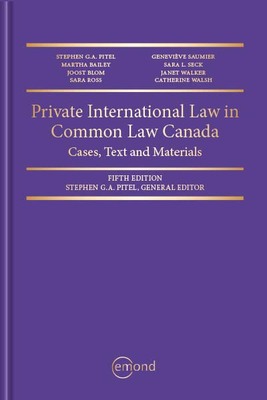
Private International Law in Common Law Canada: Cases, Text and Materials
Stephen G.A. Pitel, Martha Bailey, Joost Blom, Sara Gwendolyn Ross, Geneviève Saumier, Sara L. Seck, Janet Walker, and Catherine Walsh
Private international law, also known as conflict of laws, refers to the intersections of law between private citizens of different countries and the recognition, regulation, and enforcement of legal rights in cases involving foreign entities. Commonplace in modern commerce and increasingly prevalent in areas such as family law, private international law presents challenging legal issues for Canadian courts.
Private International Law in Common Law Canada: Cases, Text and Materials, 5th Edition introduces the historical and theoretical underpinnings of private international law, exploring its constitutional implications and intersections with public policy. It examines three key issues: taking jurisdiction over a dispute, recognizing and enforcing the judgment of a foreign court, and identifying the law to be applied in resolving a dispute. These issues are explored in the areas of torts, contracts, and unjust enrichment, as well as in property law, succession, and family law.
The fifth edition of this comprehensive casebook features updated case law and current legislation relevant to important issues such as the recognition and enforcement of foreign judgments, and family law matters. Authored by a team of prominent Canadian scholars, Private International Law in Common Law Canada continues to be the only casebook of its kind to examine all traditional conflict-of-law issues.
-
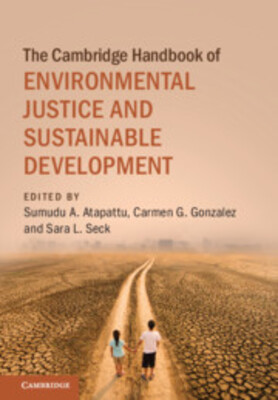
The Cambridge Handbook of Environmental Justice and Sustainable Development
Sumudu A. Atapattu, Carmen Gonzalez, and Sara L. Seck
Despite the global endorsement of the Sustainable Development Goals, environmental justice struggles are growing all over the world. These struggles are not isolated injustices, but symptoms of interlocking forms of oppression that privilege the few while inflicting misery on the many and threatening ecological collapse. This handbook offers critical perspectives on the multi-dimensional, intersectional nature of environmental injustice and the cross-cutting forms of oppression that unite and divide these struggles, including gender, race, poverty, and indigeneity. The work sheds new light on the often-neglected social dimension of sustainability and its relationship to human rights and environmental justice. Using a variety of legal frameworks and case studies from around the world, this volume illustrates the importance of overcoming the fragmentation of these legal frameworks and social movements in order to develop holistic solutions that promote justice and protect the planet's ecosystems at a time of intensifying economic and ecological crisis.
-
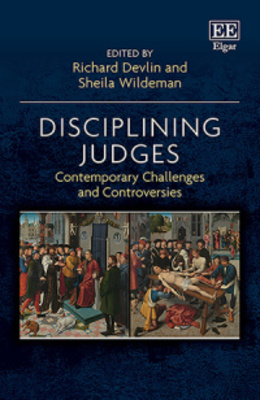
Disciplining Judges: Contemporary Challenges and Controversies
Richard Devlin FRSC and Sheila Wildeman
Globally, countries are faced with a complex act of statecraft: how to design and deploy a defensible complaints and discipline regime for judges. In this collection, contributors provide critical analyses of judicial complaints and discipline systems in thirteen diverse jurisdictions, revealing that an effective and legitimate regime requires the nuanced calibration of numerous public values including independence, accountability, impartiality, fairness, reasoned justification, transparency, representation, and efficiency.
The jurisdictions examined are Australia, Canada, China, Croatia, England and Wales, India, Italy, Japan, the Netherlands, Nigeria, Poland, South Africa, and the United States. The core findings are four-fold. First, the norms and practices of each discipline regime differ in ways that reflect distinct social, political, and cultural contexts. Second, some jurisdictions are doing better than others in responding to challenges of designing a nuanced and normatively defensible regime. Third, no jurisdiction has yet managed to construct a regime that can be said to adequately promote public confidence. Finally, important lessons can be learned through analysis of, and critically constructive engagement with, other jurisdictions.
/="/">
/="/">The first comprehensive comparative collection on judicial discipline systems, Disciplining Judges, will inspire new conversations among academics, students, judges, governmental officials and political scientists. -
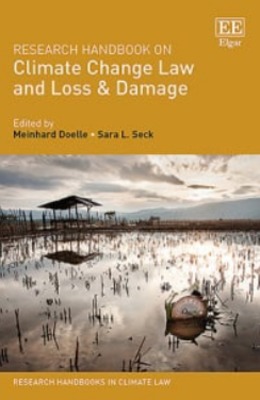
Research Handbook on Climate Change Law and Loss & Damage
Meinhard Doelle and Sara L. Seck
This timely Research Handbook offers an insightful review of how legal systems – whether domestic, international or transnational – can and should adjust to fairly and effectively support loss and damage (L&D) claims in climate change law. International contributors guide readers through a detailed assessment of the history and current state of L&D provisions under the UN climate regime and consider the opportunities to fund L&D claims both within and outside the UN climate system.
-
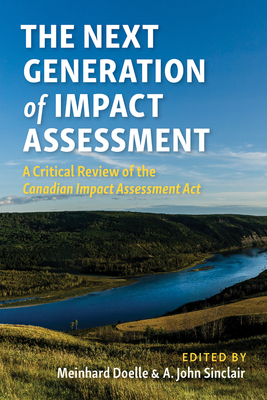
The Next Generation of Impact Assessment
Meinhard Doelle and A. John Sinclair
Legislated impact assessment requirements were first introduced over fifty years ago with the National Environmental Policy Act in the United States and have since spread to over a hundred and fifty jurisdictions around the world. The details have varied widely, reflecting the global diversity of socio-ecological and governance systems and associated issues, traditions, capacities, ambitions, and power structures. In 2015, Canada embarked on a task that no other country has attempted in recent years: fundamentally reconsidering how best to tackle environmental assessment. This review and revision process ended with the passage of the Impact Assessment Act (IAA) in 2019.
The Next Generation of Impact Assessment explores the evolution of the Canadian assessment process and evaluates the effectiveness of the IAA. Each chapter provides an in-depth analysis of the Act in regard to:
- the contents of the IAA
- regulations and guidance
- an assessment of these provisions based on the literature
- best practices related to the essential elements of impact assessment and federal government commitments made
- establishing any action needed to ensure effective implementation of the IAA
The book also investigates areas of concern for implementation of the Act and proposes areas of further reform. The authors apply their expertise by providing a comprehensive and detailed examination of various sections and provisions while considering essential components that should be included in the next generation of assessment law and policy. The authors conclude that the IAA has the potential to one day symbolize a breakthrough in the federal assessment process, and this text is an invaluable resource dedicated to the successful implementation of the Act and to its continuous improvement.
-

Transparency, Power, and Influence in the Pharmaceutical Industry: Policy Gain or Confidence Game?
Katherine Fierlbeck, Janice Graham, and Matthew Herder
There is plenty of controversy surrounding pharmaceuticals, but it cannot be denied that the pharmaceutical industry is both socially beneficial and profitable. Regulators are expected to ensure that the economic success of the industry does not come at the expense of public safety, yet they have also assumed a cooperative role by providing advice on regulation and by targeting unmet medical needs. Concerns over regulatory standards, conflicts of interest, and the manipulation of information on drug safety and effectiveness have led to public mistrust and a greater need for transparency between the pharmaceutical industry and government regulators.
Transparency, Power, and Influence in the Pharmaceutical Industry evaluates the progress made in holding the pharmaceutical industry responsible for creating transparency in the industry, from development to market. The contributors to this volume examine the various mechanisms introduced to make the regulatory process more informative and situate these efforts within the larger project of enhancing the safety of drugs, vaccines, and other products.
-
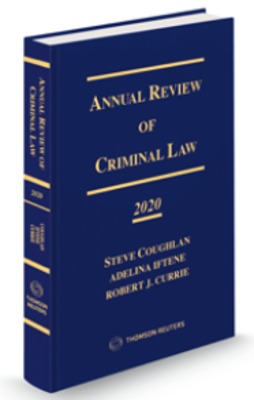
Annual Review of Criminal Law 2020
Adelina Iftene, Robert J. Currie, and Steve Coughlan
The Annual Review of Criminal Law 2020 is an analysis of the most significant case law and statutory developments in 2020 and their impact on the practice of criminal law in Canada. The authors, who have written extensively on criminal law, procedure, and sentencing, draw upon their varied experience to chronicle and analyze the most significant case law and statutory developments, detailing how they impact the practice of criminal law in Canada.
New in this edition:
- An Act to amend the Criminal Code, the Youth Criminal Justice Act and other Acts, S.C. 2019, c. 25 (former Bill C-75)
- An Act to amend certain Acts and Regulations in relation to firearms, S.C. 2019, c. 9 (former Bill C-71)
- An Act to amend the Criminal Code (bestiality and animal fighting), S.C. 2019, c. 17 (former Bill C-84)
- An Act to amend the Criminal Code and other Acts (ending the captivity of whales and dolphins), S.C. 2019, c. 11 (former Bill S-203)
- An Act respecting national security matters, S.C. 2019, c. 13 (former Bill C-59)
- An Act to amend the National Defence Act and to make related and consequential amendments to other Acts, S.C. 2019, c. 15 (former Bill C-77)
- Budget Implementation Act, 2019, No. 1, S.C. 2019, c. 29 (former Bill C-97)
-
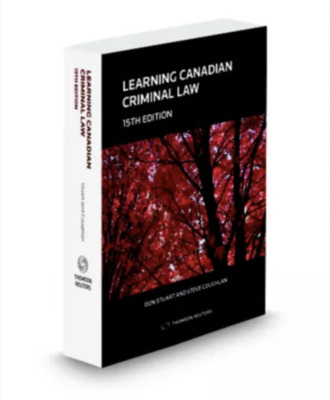
Learning Canadian Criminal Law
Don Stuart and Steve Coughlan
This fifteenth edition continues to focus on tools students must acquire to be effective criminal lawyers, including critical skills. The aim is to explore substantive principles and the trial context: the adversary system, how elements of crime are proved, principles of act and fault, legal justifications and excuses, and sentencing principles. Integrated throughout is a consideration of the impact of the Charter. The focus is on major sources: the Criminal Code itself and key judicial decisions. Learning is facilitated by notes, questions, problems and general review questions.In this edition we made a special effort to thoroughly update, re-edit, prune or delete dated material. Particularly major changes were made in chapters 1 and 4.
Printing is not supported at the primary Gallery Thumbnail page. Please first navigate to a specific Image before printing.